
Italy — Veneto
Adria
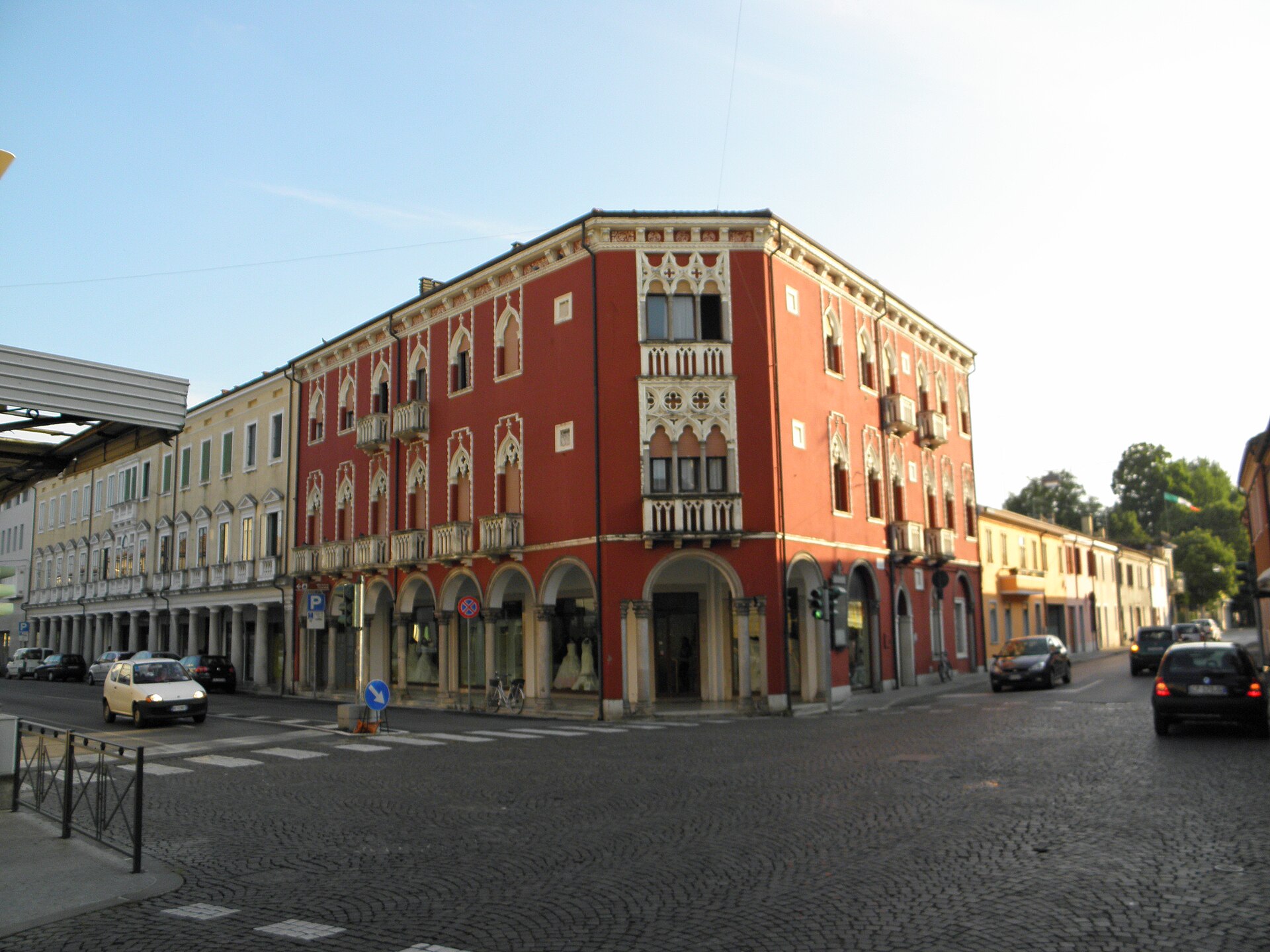
Adria is a quiet provincial town in the Veneto, set inland near the Po Delta, whose modest present-day scale belies an outsized ancient history. It gave its name, or possibly took it from an earlier settlement, to the Adriatic Sea, though the exact etymology is still debated. Founded in the early 6th century BCE, it was a trading crossroads where Etruscans, Greeks, and local Venetic peoples mixed, later becoming a Roman municipium; much of this layered past lies buried directly beneath the modern town, with extensive ancient necropolises surrounding it.
The National Archaeological Museum is the town's centerpiece and reason enough to visit, holding Bronze Age through Roman material that traces this unusually cosmopolitan ancient port. Above ground, the historic center is gathered around Piazza Garibaldi and the clock tower, with Corso Vittorio Emanuele II as the main street and a riverside promenade along the Canalbianco. Santa Maria Assunta, known as "della Tomba," has early Christian roots beneath a 17th-century façade, while the Cathedral of Saints Peter and Paul, begun in 1776, took decades to complete. The 1930s Teatro Comunale adds a sturdy 20th-century civic landmark to the mix.
Adria suits travelers drawn to archaeology and layered history rather than postcard scenery—an unhurried stop rewarding those willing to look beneath the surface.