
Italy — Sicily
Acireale
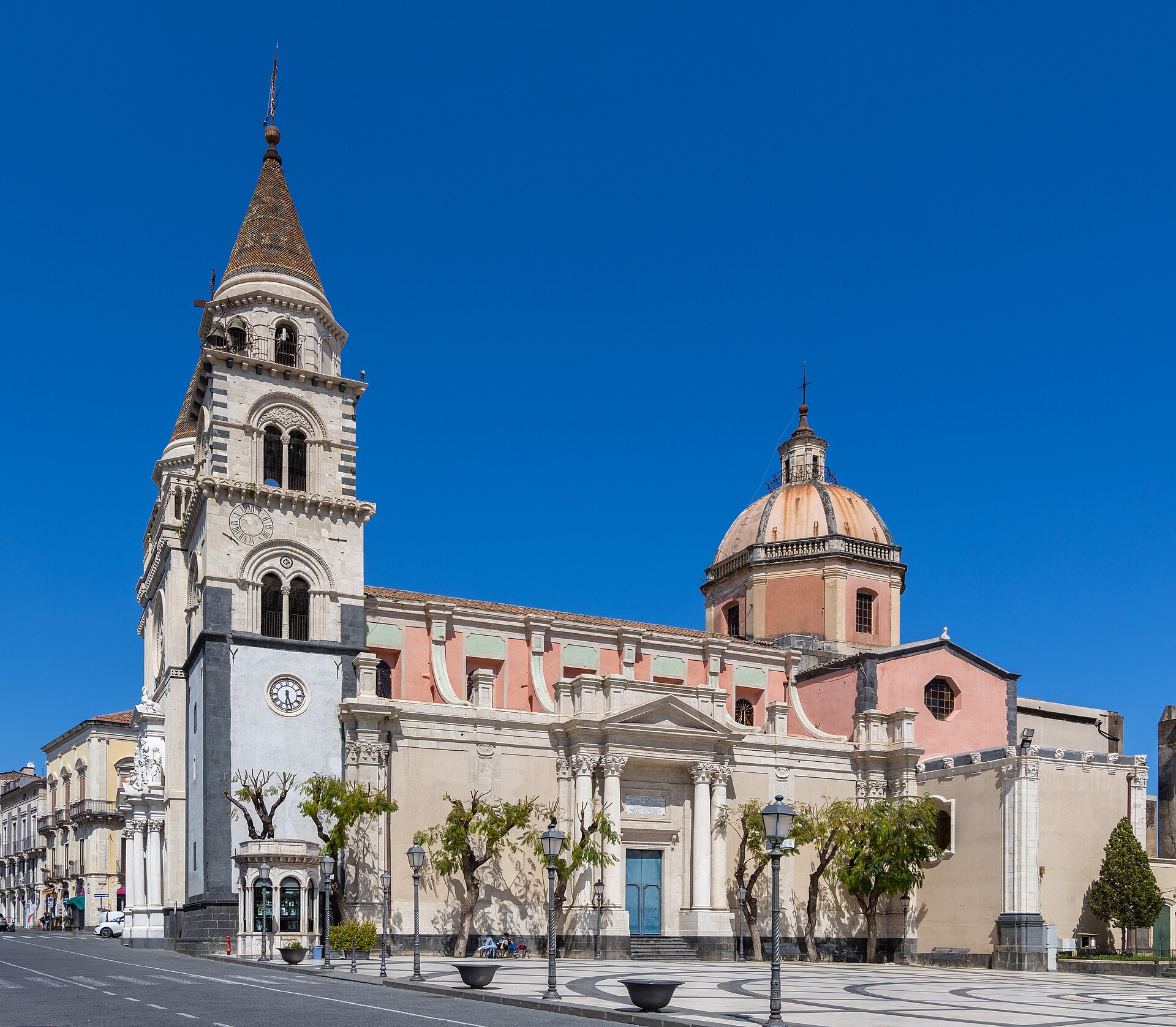
Acireale perches on a plateau on Sicily's Ionian coast, just north of Catania and below Etna's eastern slopes, occupying a site the town moved to in 1326. Its character is defined by Baroque architecture: rebuilt after the devastating 1693 earthquake, the historic center around Piazza Duomo is dense with churches, bell towers, and ornate palaces. The standout is the Basilica Collegiata di San Sebastiano, with a theatrical, multi-tiered façade, a balustraded forecourt lined with statues, and frescoes by local painter Pietro Paolo Vasta—elevated to minor basilica status in 1990. The cathedral and the Basilica of Saints Peter and Paul round out a townscape built almost entirely around ecclesiastical grandeur.
Beneath this formal upper town lies a sharper contrast: the Timpa, a volcanic escarpment of lava cliffs and terraced Mediterranean scrub, protected since 1999 as a nature reserve. A walking route called the Chiazzette switchbacks down the cliff face, past a small fortress, to the tiny fishing hamlet of Santa Maria la Scala on the shore below.
Acireale is also known across Sicily for its Carnival, one of the island's oldest and most elaborate, featuring enormous allegorical papier-mâché floats and flower-covered processions through the Baroque streets—a lively, still-thriving tradition rather than a museum piece, best timed if visiting in late winter.