
Italy — Campania
Acerra
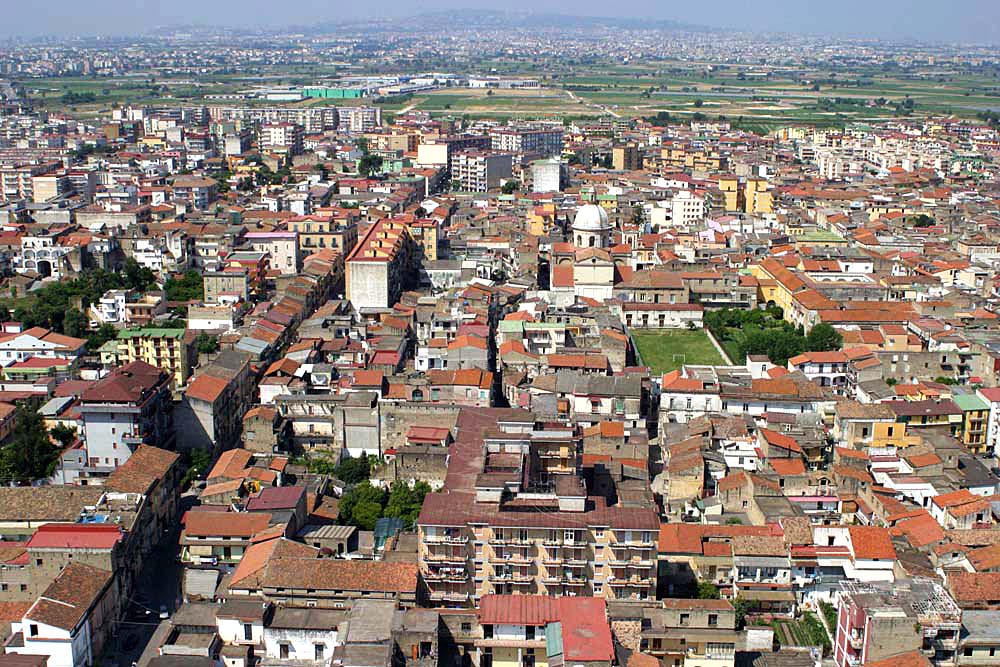
Acerra sits on the flat Campanian plain northeast of Naples, a working town of around 58,000 people rather than a postcard destination, but one with genuine layers of history for those willing to look past its unassuming surface. The Castello Baronale, anchoring Piazza Castello, began as a Lombard stronghold with roots possibly reaching the ninth century, later converted into a noble residence; its oddly irregular footprint traces the buried remains of a Roman theater, with excavated sections of the stage still visible. Inside, a small museum covers both Acerra's own past and nearby Suessula, alongside a dedicated space for Pulcinella and local folklore traditions that run deeper here than the generic Neapolitan stock character suggests.
Suessula itself, out in the Bosco di Acerra near the eighteenth-century Casina Spinelli, is the real draw for ancient-history enthusiasts: a site with burials from the ninth century BCE and layers of Etruscan, Samnite, and Roman occupation, centered on the old Roman forum, still only partially accessible as excavation continues.
The neoclassical Duomo, rebuilt and dedicated in 1874, offers a contrasting, more recent landmark. Food-wise, the area falls within the DOP zone for buffalo mozzarella. Trains connect easily to Naples and Caserta, though the station offers little assistance for travelers with mobility needs.