
Italy — Tuscany
Abbadia San Salvatore
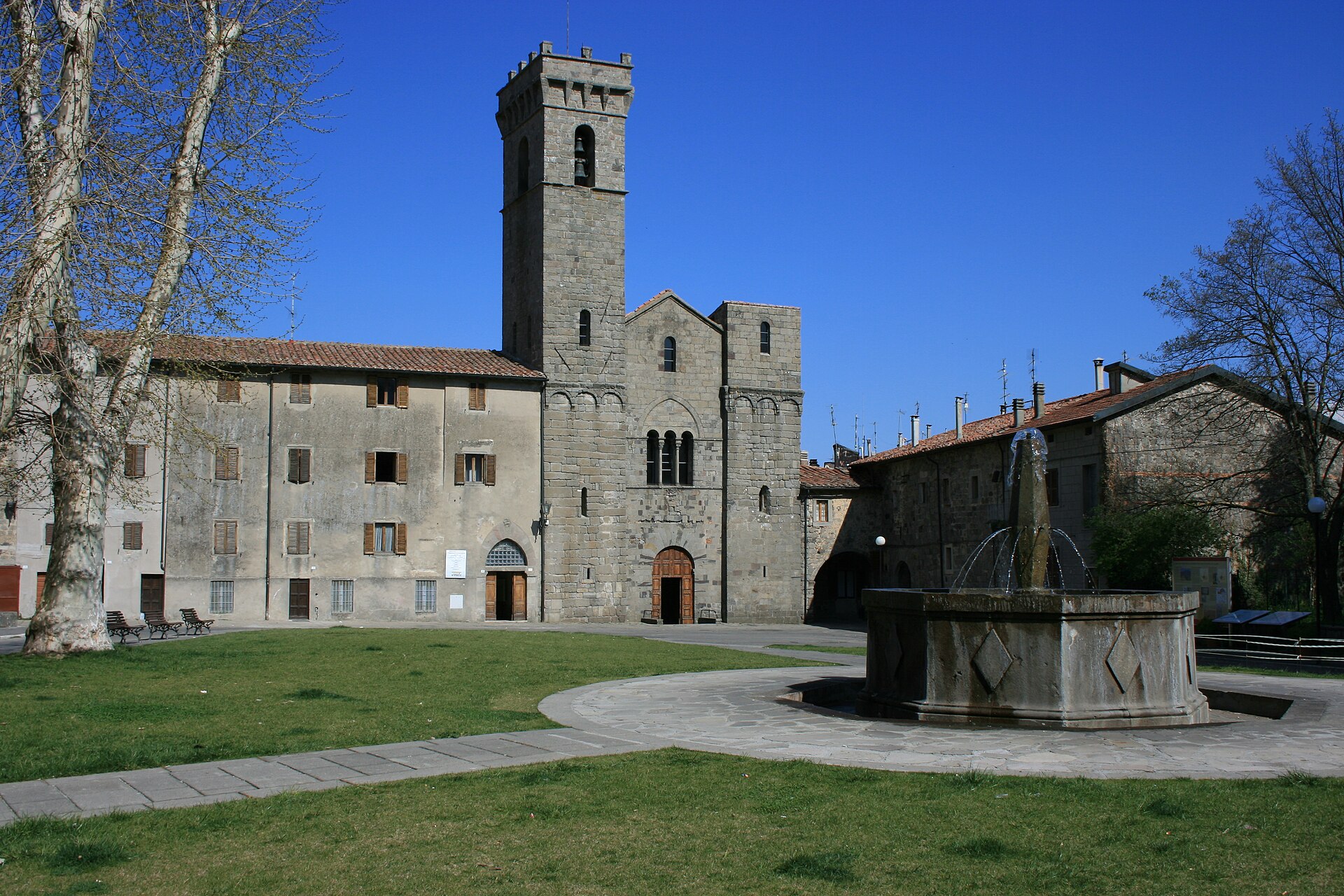
Abbadia San Salvatore sits high on the volcanic slopes of Monte Amiata in southern Tuscany, a region of chestnut woods and beech forest largely overlooked by the usual Tuscan circuit of hill towns. The town itself splits into two distinct layers: a modern quarter of broad, tree-lined streets, and the Castello, a compact medieval core where three parallel lanes thread past the Palazzo del Podestà, Palazzo del Popolo, and the 13th-century church of Santa Croce.
At the center of it all is the Abbey of San Salvatore, founded in the 8th century and later passed to the Cistercians, its Romanesque church and columned crypt still anchoring the old town. For centuries this abbey held the Codex Amiatinus, one of the great early medieval Bibles—now in Florence, but its memory shapes local identity.
Less expected is the Parco Museo Minerario, a former mercury mine worked until 1972, where guided tours descend into the old galleries—an industrial counterpoint to the abbey's spiritual history. Come December 24th, neighborhood groups build towering wooden pyres, the Fiaccole, and set them ablaze through the medieval quarters, while Easter brings the costumed Giudeata procession. It's a place for travelers drawn to layered, lesser-visited Tuscany rather than postcard vineyards.